What We’ve Accomplished & Where We’re Headed
Progress Report | March - May 2026
“This is an opportunity to
pull back and imagine what
a better system can and
should look like.”
The Challenge
Behavioral health challenges for youth are urgent and widespread. Up to 1 in 5 young people in the U.S. have a reported mental, emotional, developmental, or behavioral disorder, yet about half of those with treatable behavioral health disorders do not receive adequate treatment. Adolescent substance use disorders affect over a million youth in the U.S. each year, but only 10% of youth report receiving substance use prevention programming.
Better designed policies can help increase access to effective behavioral health care and programs. But many health policies fail to achieve their intended impact.
The Process
This policy codesign process is part of the implementation of first initiatives tied to the Washington Thriving statewide strategic plan for equitable behavioral health for children, youth, and young adults.
In alignment with proposed legislation (HB 1634), CoLab for Community and Behavioral Health Policy partnered with the Washington Office of Superintendent of Public Instruction (OSPI) to launch the co-development of a statewide training and technical assistance framework for K–12 schools to support student behavioral health, with partners in the broader health system.
This work focuses on helping schools navigate the complex landscape of behavioral health: supporting earlier identification of student needs, improving access to services and supports, and making better use of available resources and funding.
Where We Are
This project spans two phases. The first phase is what we’re currently in: active codesign. The second phase will start in summer 2026, when OSPI and the Educational Service Districts (ESDs) will take the proposal developed from the first phase and begin to plan for implementation, in alignment with HB 1634.
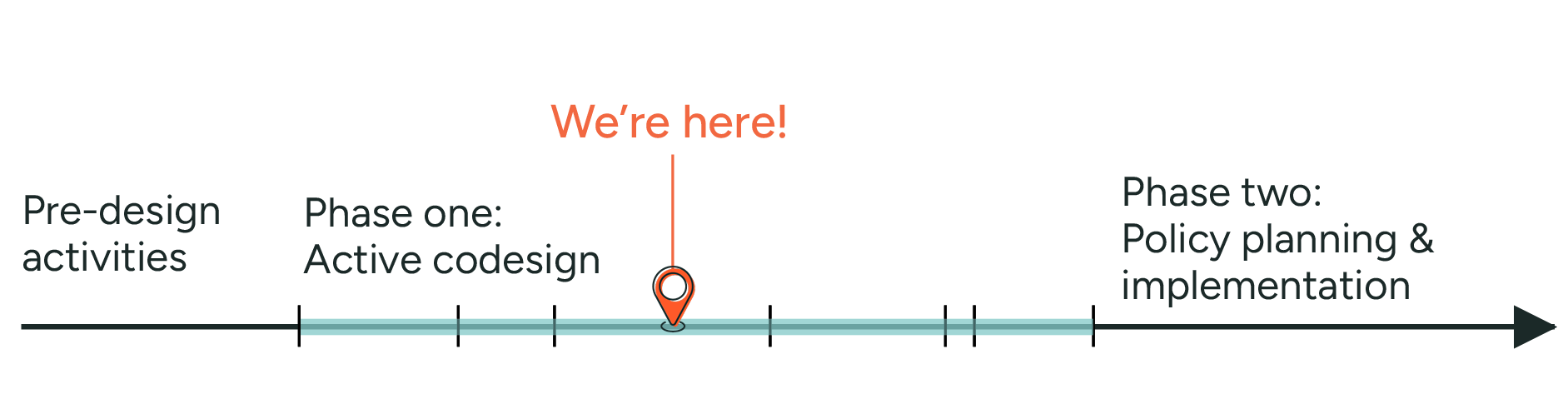
The focus of the active codesign phase is to explore values, goals, evidence, policy levers, and strategies around school behavioral health and technical assistance and training approaches.
What’s Happened So Far
• The Core Design Team is now a third of the way through the active codesign phase of the project and has been exploring key design challenges related to K–12 behavioral health support in schools.
• Youth Voice workshops surfaced strong calls for earlier intervention, more empathy and patience from educators and staff, and greater inclusion of youth perspectives in policy and decision-making spaces.
• Family and Caregiver engagement activities gathered feedback on what is and isn’t working within current school behavioral health systems, with insights directly integrated into the design process.
• Our first statewide Community Sounding Board activity is now live, inviting broader public input to help inform future policy recommendations and prototype development.
• Across all engagement efforts, a consistent theme is emerging: students, families, educators, and communities are eager for more coordinated, responsive, and human-centered approaches to school behavioral health support.
“If we truly believe children
are sacred, what should
that look like in practice?””
Core Design Team
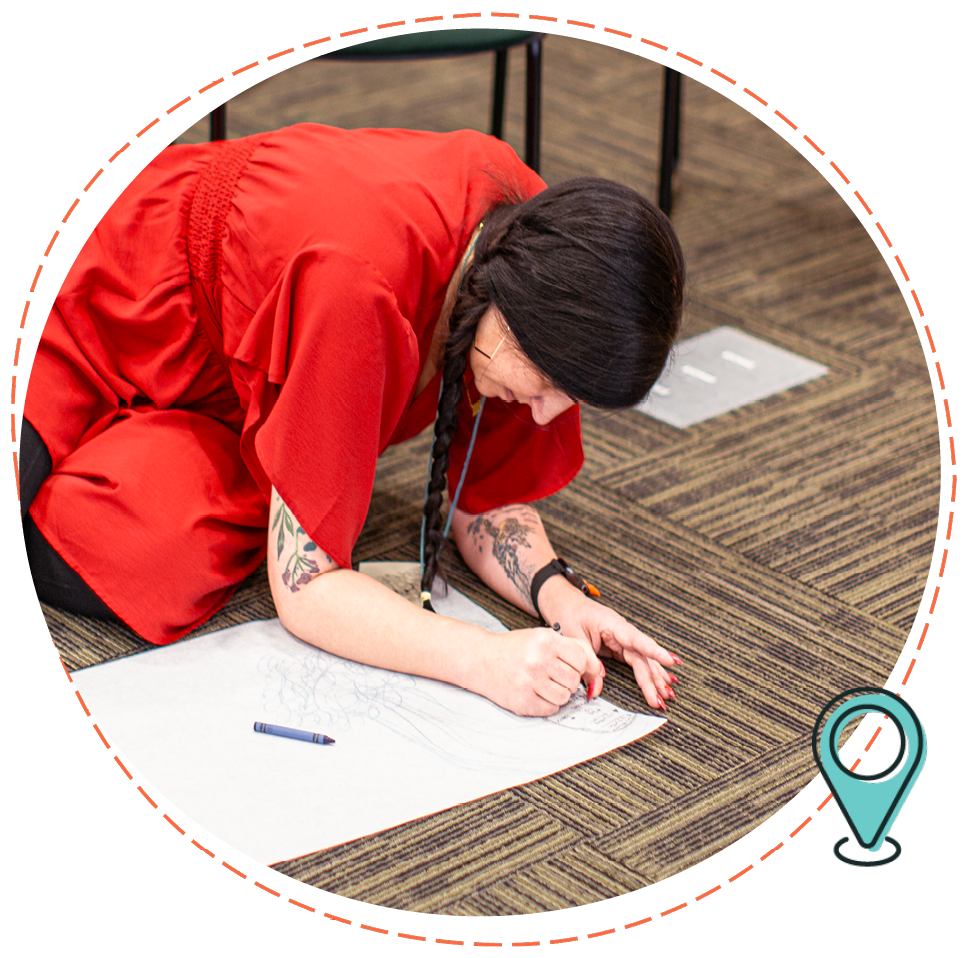
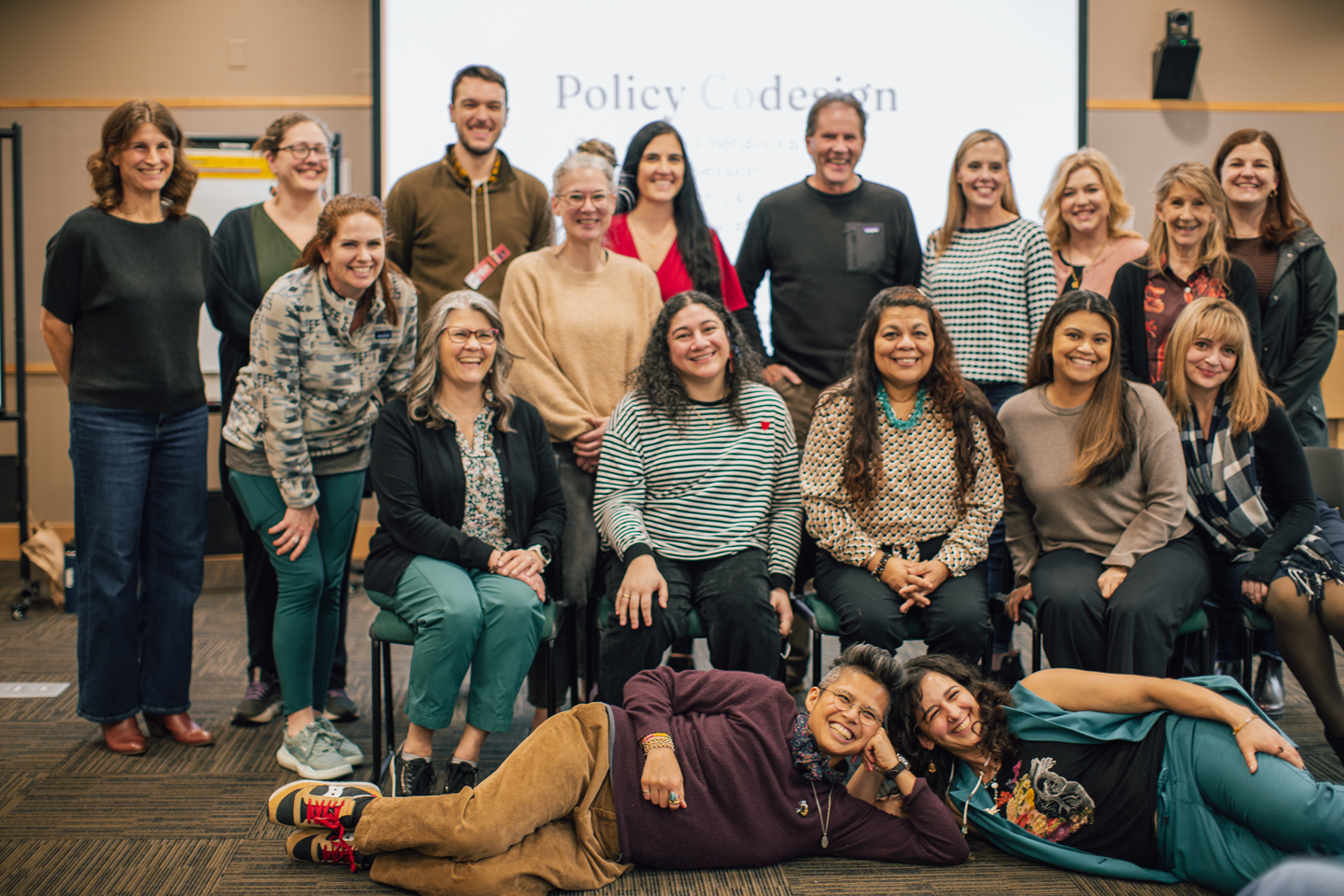
The Core Design Team brings together voices from across Washington State, including the state agency partners, Educational Service Districts, school districts, community-based organizations, nonprofits, researchers, healthcare workers, consultants, tribal representatives, students, families, and advocacy organizations. Through intentional, iterative engagement with youth, families, tribal communities, and the broader public, the design process continuously returns to lived and living experience as its grounding force — centering the real needs, wisdom, and priorities of those most impacted in the emerging recommendations.
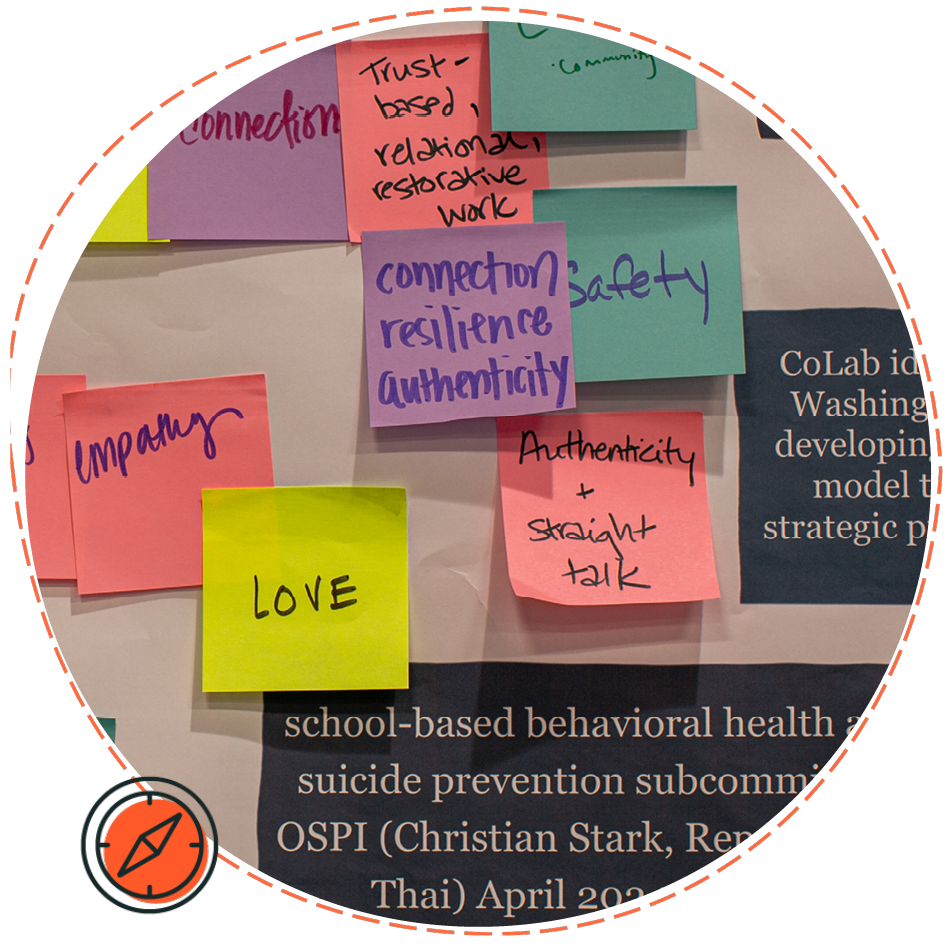
We’ve held three design workshops facilitated by Rose Waterstone and Amadeo Cruz Guiao. After grounding in relationship building and aligning on shared values and agreements, the team identified and began exploring eight key design challenges. (Read about these in our April update!)
Youth Voice
As part of ongoing efforts to ensure the recommendations resulting from this codesign process are firmly grounded in the perspectives of young people, we’ve held our two workshops so far focused on gathering youth recommendations for K-12 behavioral health supports. In the workshops, youth shared important insights — including the need for more patience and empathy from staff and educators when students are struggling, and a call for earlier interventions before challenges escalate. A highlight of the workshops was a powerful presentation from the Justice for Girls Coalition of WA on the importance of youth voice in advocacy and policy spaces, co-presented alongside one of the incarcerated young women from their GAIN program.
Two young people are co-leading youth voice engagement for this project. Sara Kahn is a student at the University of Washington working towards a Bachelor’s in Political Science. She has been working in the advocacy space since she was 14. Kenneth Garcia is a high school senior who serves as the Policy and Political Director of the Washington Youth Alliance, and is the current Yakima Parks & Recreation Youth Commissioner.

“If I could change one
thing, it would be to shift
schools from a punishment
first approach to an early
support and wellbeing first
approach.”
Caregiver Voice
Shayla Collins, CoLab’s family liaison, attended the Washington State Community Connectors’ Lanterns in the Dark and Keys to the Future events focused on gathering family feedback about needed changes to Washington state’s behavioral health system for youth. The Keys to the Future event included breakout sessions focused specifically on the K-12 system where families and youth shared what they saw as working well and needing improvement. Caregiver perspectives from these sessions and other avenues are being integrated directly into the core design planning, which also includes representatives from WSCC and other parent groups.
Advisory Team
The Advisory Team, provides critical guidance for the Core Design Team throughout the design process. This expansive group brings additional experience and expertise into the design process beyond what is represented on the Core Design Team, without the same intensive time commitment required of Core Design Team participation. Our first formal Advisory Team meeting will be held on May 20.
Community Sounding Board
We’ve just launched our first Community Sounding Board activity to gain broad public input on our eight design challenges. To participate, share your thoughts by May 29.
Community Sounding Board participants are encouraged to opt into regular updates on the design process and provide ongoing feedback throughout. All feedback will be synthesized and shared with the Core Design Team to inform their recommendations.
What Comes Next
As we move into the latter half of the active codesign phase, the Core Design Team will begin developing prototypes of a Training and Technical Assistance framework based on their own expertise and the wealth of input gathered from the many people that make up the extended project team. These early prototypes will explore possible approaches to supporting K–12 school behavioral health across Washington, including how schools can better navigate behavioral health services, strengthen collaboration across systems, and access meaningful training and support.
Throughout the summer, these emerging ideas will continue to be refined through ongoing feedback and engagement. Youth, caregivers, educators, community partners, and advisory members will all play an important role in helping test, challenge, and strengthen the work as it evolves.
Project Collaborators
What is Codesign?
Codesign is a process where designers and those with experience or knowledge of the thing to be designed work together.
Codesign spans the whole design process: from understanding experiences and deciding priorities, to proposing solutions and developing the desired outcome. It draws from the past while looking towards a new and better future.
This codesign process incorporates knowledge from our:
• Core Design Team
• Advisory Team
• Youth Voice Group
• Caregiver Group
• Community Sounding Board
• & many others!
Contact
Questions about this policy codesign process? Contact Kate Cunningham at kateac@uw.edu.