TERRAIN


Building lasting social and health policy solutions for state and local communities.

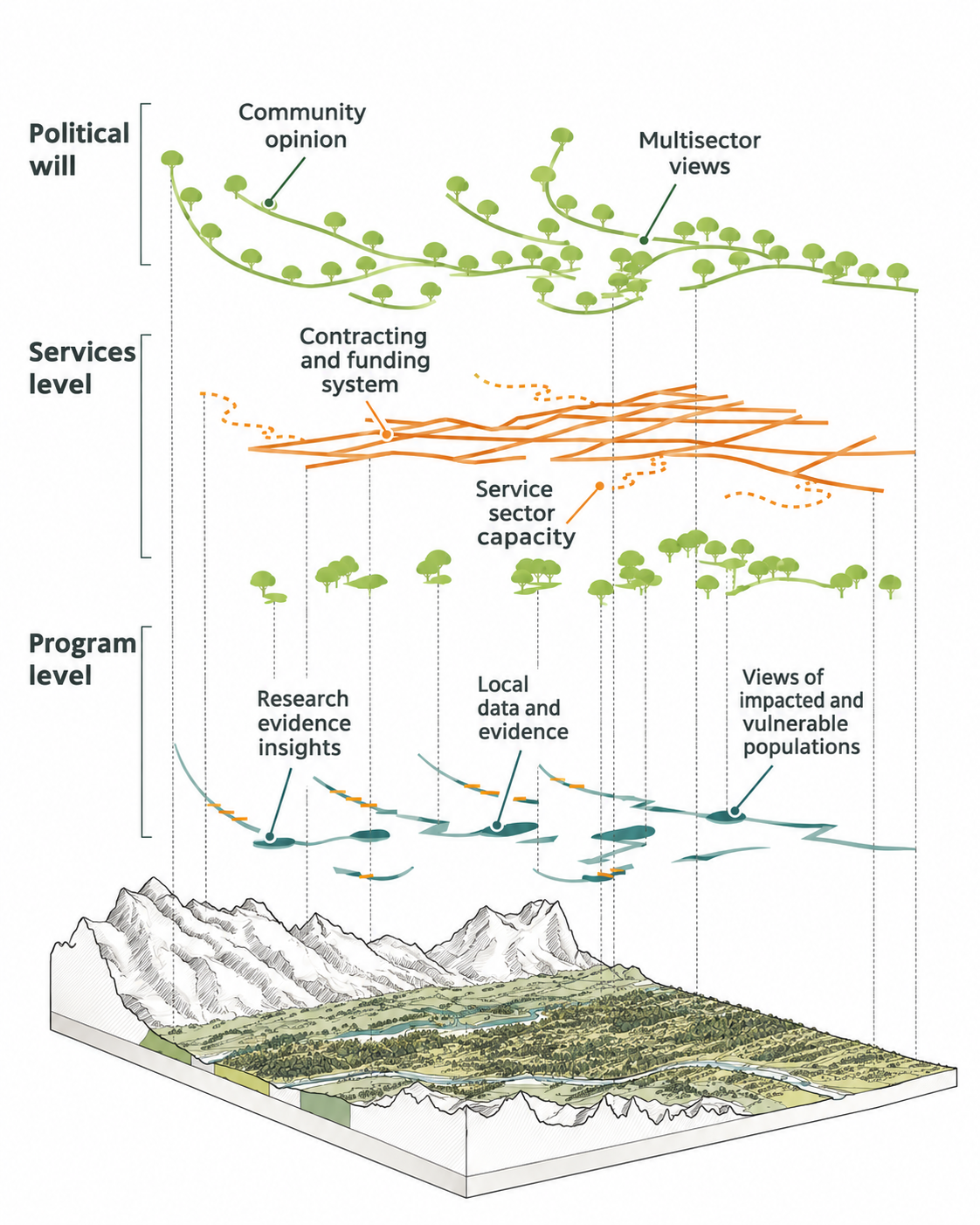
Policy ideas often fail because they are not designed around local system and community capacity, political will, and information about what has failed or worked in other places. TERRAIN is a model of social policy design that anticipates and plans around these challenges.

map top right 4.jpg
 

TERRAIN is

Transformative
Evidence-Aligned
Responsive
Resilient
Advancing
Inclusive
Neighborhood-Sensitive

policy formation.

Okanogan County 2 - test.jpeg

 The TERRAIN Model

 Complex policy challenges require more than a one-size-fits-all solution. Different communities have different histories, systems, resources, political environments, populations, and implementation conditions. Just as you wouldn’t build the same structure on every landscape, policy solutions need to respond to the conditions of the place where they will be implemented.

To work well, social and health policies must respond to the needs of community members and patients, the capacities of service systems, the constraints of government and the will of the public for change. Many well-intentioned efforts to address public problems have limited impact because they miss a crucial reality at one or more of these levels.

Communities have the vision, TERRAIN builds around the vision to support sustainable change.

Plain dark background.jpg

Why TERRAIN?

 Complex policy challenges require more than a one-size-fits-all solution. Different communities have different histories, systems, resources, political environments, populations, and implementation conditions. Just as you wouldn’t build the same structure on every landscape, policy solutions need to respond to the conditions of the place where they will be implemented.

To work well, social and health policies must respond to the needs of community members and patients, the capacities of service systems, the constraints of government and the will of the public for change. Many well-intentioned efforts to address public problems have limited impact because they miss a crucial reality at one or more of these levels. Developing sustainable and robust solutions to address large scale issues requires multiple types of data, analysis, and planning. But even more than strategic thinking, these complex problems require creativity and vision.  

Communities have the vision, TERRAIN builds around the vision to support sustainable change.
med teal gray.jpg

 TERRAIN Values


Place-responsive

Designed around the realities of each community and system.


Community-driven

People affected by policy help shape it, rather than simply give input or react to a finished proposal.


Evidence-aligned

High-quality evidence informs the process without prematurely or inappropriately narrowing the range of possible solutions.


Implementation-focused

Policy is developed with real-world feasibility, systems constraints, and implementation in mind from the beginning.

 
background map 2.jpg